AV Stumpfl’s PIXERA powers Houston airport’s 49-million-pixel interactive display, the Oculus
At George Bush Intercontinental Airport, PIXERA media servers drive one of the most technically demanding architectural LED installations in North America.
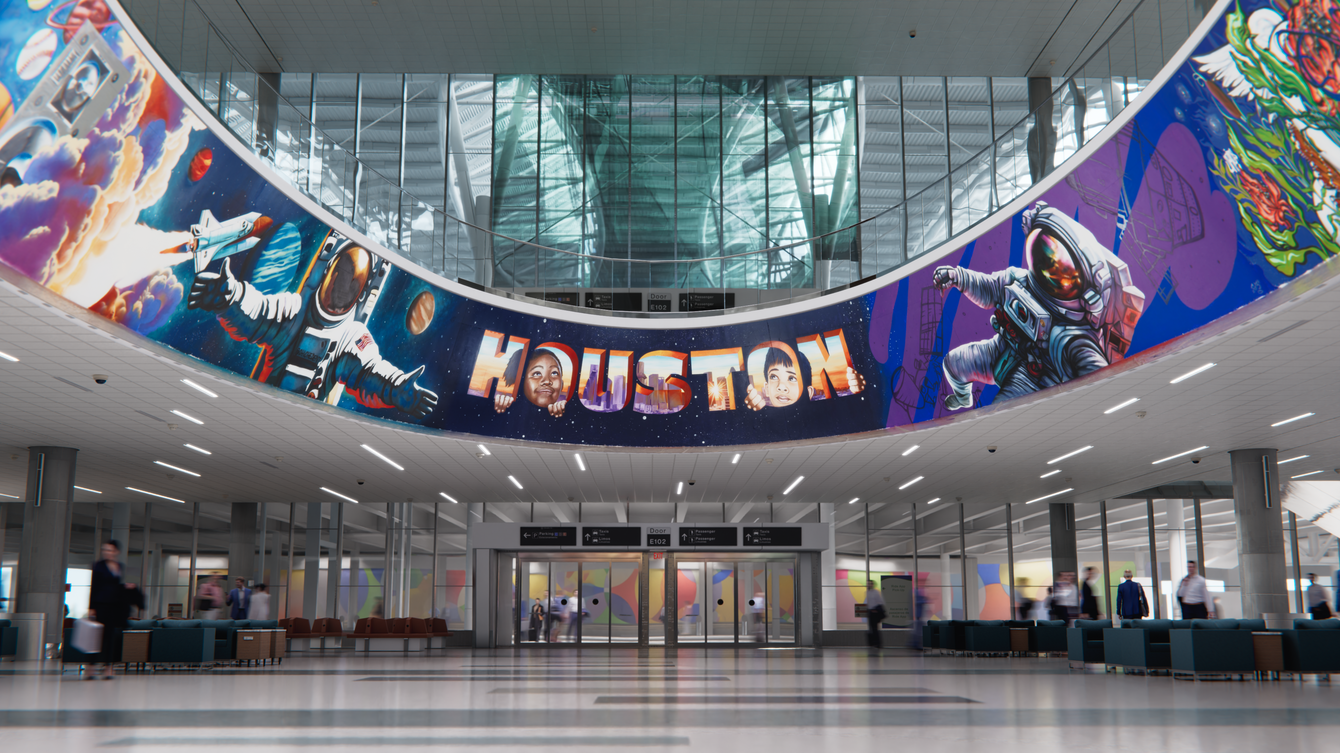
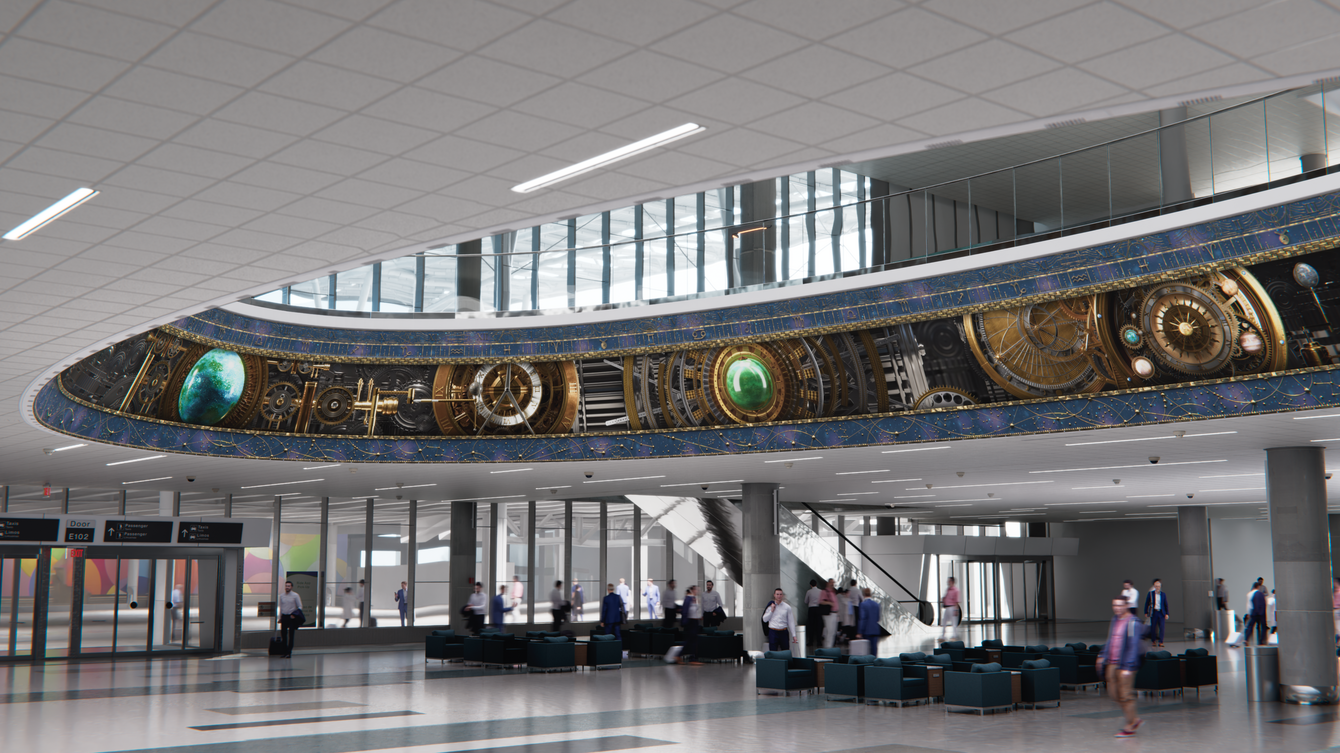
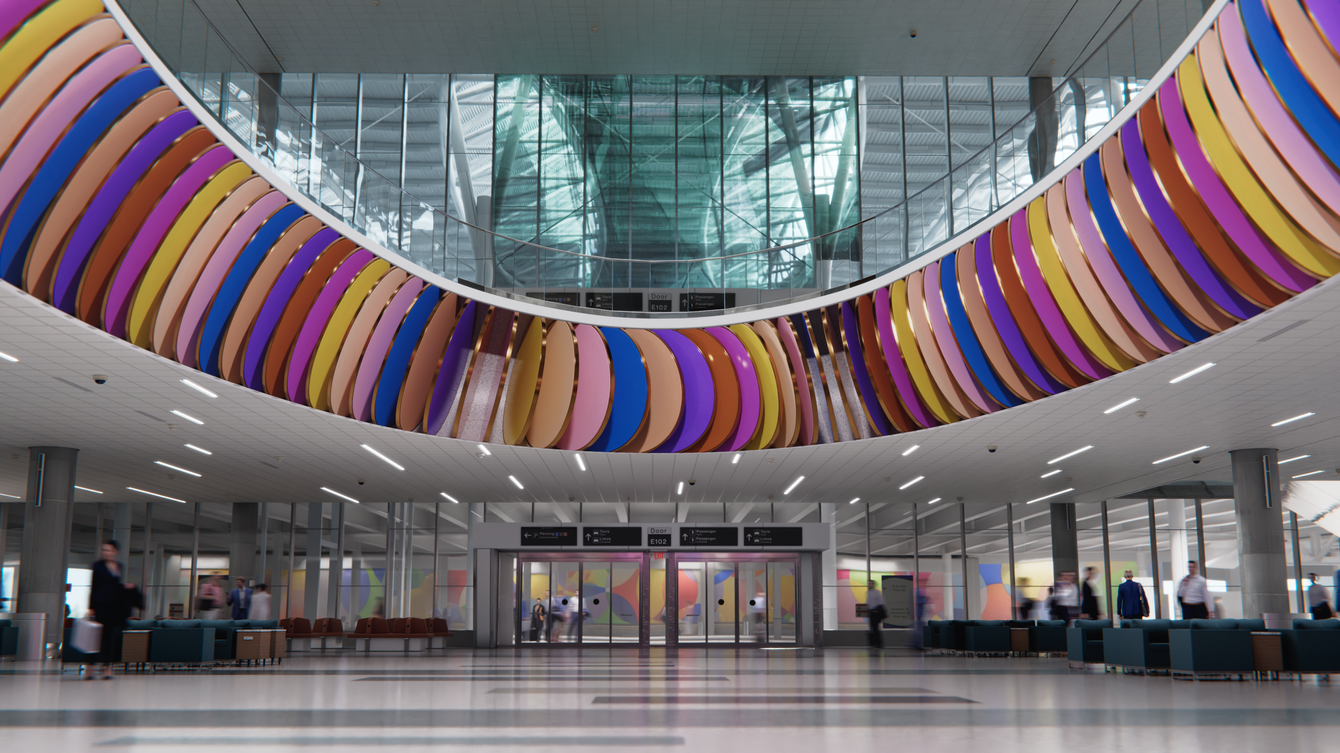
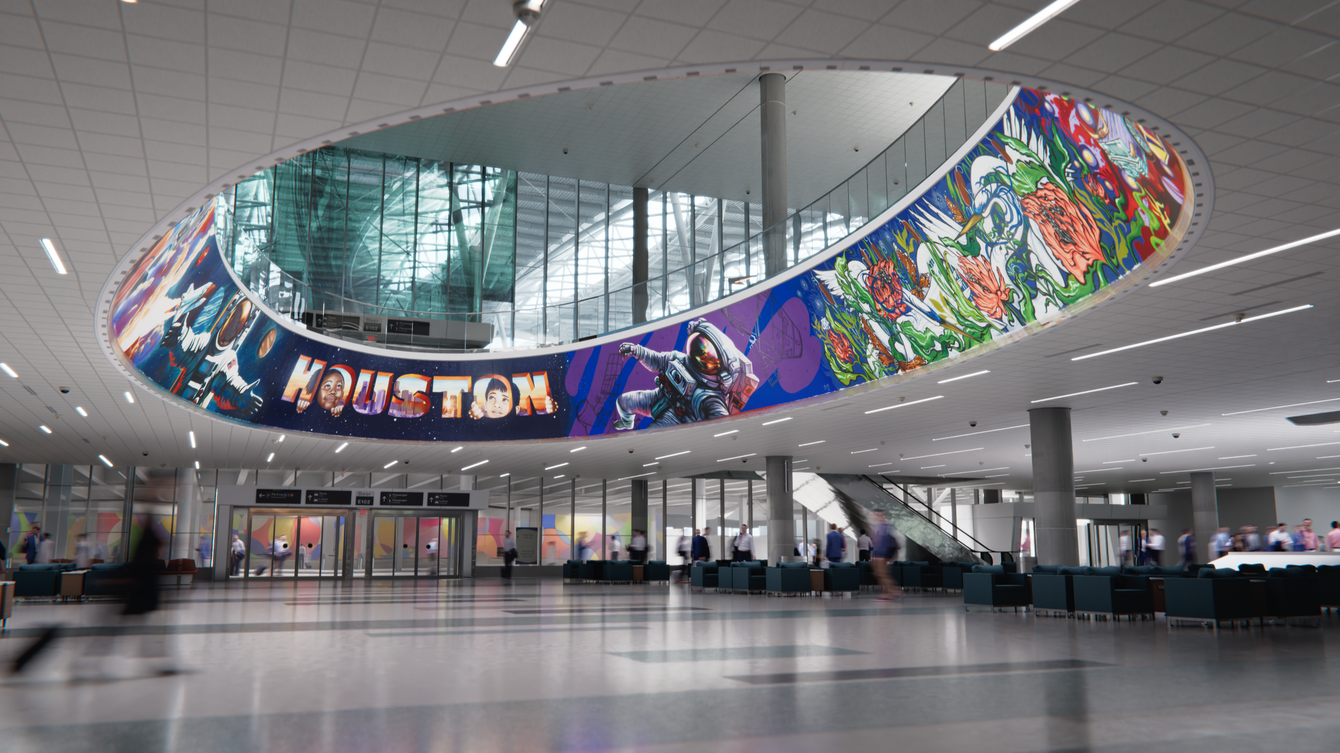
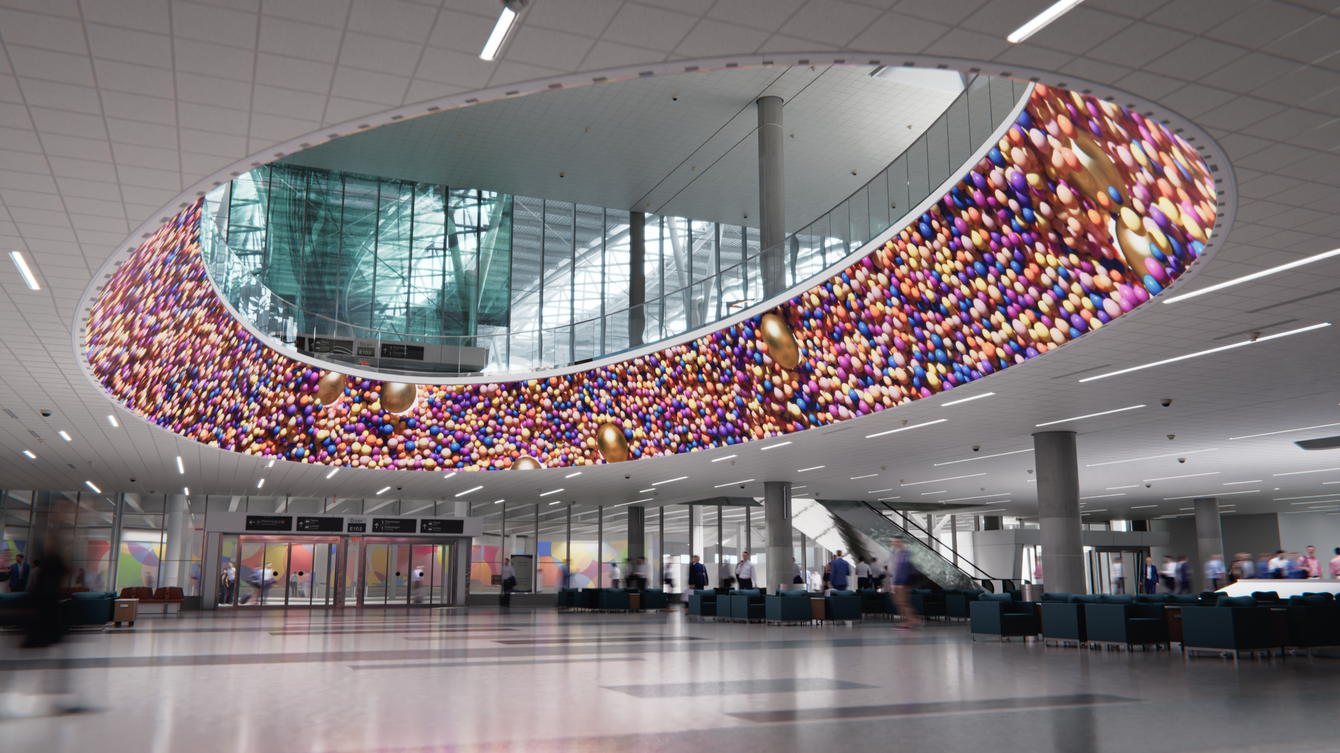
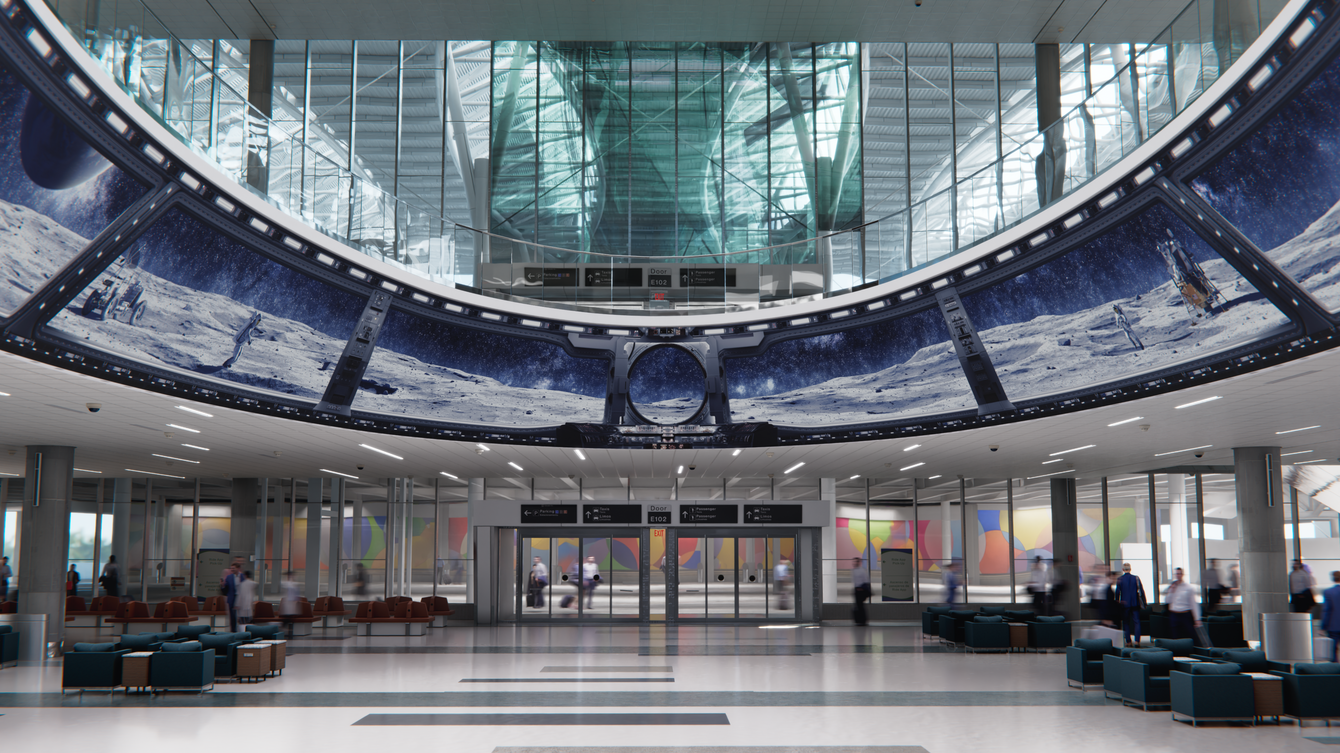
George Bush Intercontinental Airport in Houston, Texas, is home to one of the most ambitious architectural LED installations on the continent. Dubbed the Oculus, the structure spans the terminal concourse as a truncated elliptical cone.
From the outset, the Oculus at the Houston Airport was envisioned as a 49-million-pixel, data-driven experience—an immersive centerpiece blending art, information, and real-time interactivity. Bringing that vision to life meant overcoming significant complexity, from a compound-curved LED surface built with trapezoidal, multi-pitch tiles to the need for content that could respond dynamically to live inputs like LiDAR, airport FIDS (Flight Information Display Systems), and real-time weather changes.
PIXERA made it possible. Its timeline-based, real-time media platform—integrated with Unreal Engine capsules and connected via direct API to ISAAC CMS—enabled both pre-rendered and real-time content, while the PIXERA server’s built-in redundancy ensured 24/7 reliability. Live, sensor-driven interactivity, created a technically demanding brief for the media server layer. Together with partners Gentilhomme, Nanolumens®, and Smart Monkeys, PIXERA helped transform the Oculus from an ambitious concept into an immersive reality.
System integration was led by Ford AV, responsible for installation, content systems, and commissioning. For the media server platform, the team selected AV Stumpfl’sPIXERA, primarily based on previous successful airport integrations with these partners. The platform manages the entire content playback and output pipeline for the Oculus, handling real-time rendering across the installation’s unconventional geometry and distributing outputs to the LED surface with the precision the custom pixel layout requires.
Spanning 69 meters in total linear length, the Oculus is suspended at a 60° angle between the arrivals and departures levels, making it visible from both floors simultaneously. The structure comprises more than 2,000 Nanolumens Nixel Series® LED modules—each custom-fabricated to precise trapezoidal tolerances—combining to deliver nearly 49 million pixels across a curved surface of approximately 182 square meters. The data is processed and mapped in real time to the curved LED surface, shifting content dynamically with the flow of the terminal. The non-standard, trapezoidal canvas made LED mapping particularly complex. Dan Rossborough, Director of Strategic Projects for Nanolumens said, “The elliptical and conical shape of the seamless screen surface creates additional challenges with mapping content. To solve these challenges, a digital twin was created in Unreal Engine and carefully coordinated with PIXERA media servers in order to warp, scale and skew the content into a format that would play back on the Nanolumens screen linearly.” With pixel pitches shifting every few rows, PIXERA had to deliver hundreds of distinct feed mappings to the canvas to ensure accurate alignment and warping of the content. Rossborough continues, “…making vertical lines appear vertical to a viewer standing off-axis and off-plane, on a variable-pixel-pitch conical canvas isn’t a trivial endeavor. The technical interplay between the Unreal Engine and PIXERA media servers allowed for a logical templated approach to managing this challenge allowing the content to appear natural and paving the way for future content creation to be uploaded seamlessly into the ecosystem.”
The PIXERA platform provides the foundation of the playback system, driving real-time content across the canvas with the reliability required for a 24/7 international terminal, making it a media server solution well matched to the project’s scale and complexity.
Conceived as an interactive storytelling platform rather than a static display, immersive experience studio Gentilhomme led the creative vision, designing 27 content sequences that reflect Houston’s identity—from landmark-driven motion graphics to environmental imagery and references to the city’s role in human spaceflight. Working in close collaboration with AV Stumpfl, together they further developed the existing PIXERA–Unreal integration. Beyond scheduled playback, the experience responds in real time to its environment: occupancy sensors throughout the concourse track passenger movement, with that data processed and mapped live to the curved LED surface, allowing content to shift dynamically with the flow of the terminal. PIXERA’s flexible mapping tools accommodate the structure’s non-rectangular aspect ratio and curved pixel distribution while its open integration architecture allows it to operate alongside Smart Monkeys’ ISSAC platform, which manages interactive control logic and sensor processing, and Nanolumens’ NanoSuite display management system.
Installed pre-security, the Oculus offers travelers facing long TSA lines a calming, transfixing experience, turning wait times into a defining feature of the terminal. Because unscheduled downtime was not an option, PIXERA’s proven track record in airport deployments and robust live-failover workflow made it the ideal choice for this zero-margin-for-error project. As Darryl Daniel, Chief Technology Officer at Houston Airports explains, "It is 100% meant to be an element that shares the sense of place for the city of Houston. For many, this is their first experience of Houston; and for others, it’s the last thing they see before they leave.” Behind that experience, PIXERA ensures the content bringing Houston’s story to life is delivered precisely, reliably and responsively.